Friday, 17 February 2006

Limited Time Only

It started with Centex 12 hour sales for up to $150,000 off.
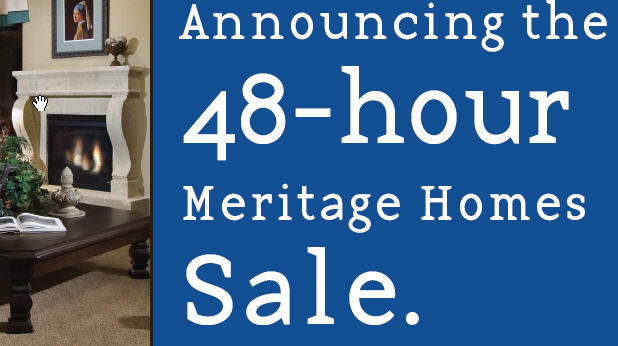
Meritage Fired Back with 48 hour sales.
Upping the ante time-wise is Ryan Homes offering $20,000 - $70,000 off
For "a limited time" only
On their Lovettsville, VA homesites.


$40,000 Off for a Limited Time Only!!!!

*Limited Time Only. Offer valid on select communities. May not be combined with any other offer. Listed prices do not reflect the additional discount. Must use NVR Mortgage. Prices and offers subject to change without notice.


Notice how the red star says $20,000 - $70,000 off but the text says $40,000.
I called Ryan at the number shown in the ad and the salesperson was not even aware of an online ad. I asked what units were $70,000 off and she did not know but thought it might be on the "executive series". I asked the price range for the "executive series" and the salesperson did not know that either.

After a brief interlude I was told that the "executive series" was priced $529,000 to $589,000.

So if one can get $70,000 off that line (I do not know because they do not know) that would be about 12-13% off depending on model.

Somehow I expect to see a lot more "limited time offers" from a lot more builders with even higher percentages off.

Mike Shedlock / Mish
http://globaleconomicanalysis.blogspot.com/

Thursday, 16 February 2006

Peak Water?

Not only are risk preferences such that people are willing to speculate heavily on home price appreciation, they also seem willing to take a gamble on water supplies at the same time.

Please consider Vegas builder's Mohave County plan stirs worries:
If Arizona lawmakers want a reason to rethink the state's rural water laws, Earl Kemp figures he's stuck dead center in the middle of Exhibit A.

Kemp watches daily as earth-moving equipment rumbles past his home in rural Golden Valley, near Kingman, pushing aside dirt and desert scrub as a Las Vegas developer prepares to build the first of more than 130,000 homes. It's an eye-popping plan that, when the final shingle is nailed in 20 or 30 years, will leave behind a city the size of Mesa in a 40-mile radius.

The developer, Jim Rhodes, assembled ample land and promised to build roads, parks, schools and shopping centers. What he couldn't promise, not with certainty, was that he could provide enough water for all the people, a failing Kemp thought would doom the project.

"There's no water out here to begin with," said Kemp, who pays to have water hauled in because he can't hook up to one of the few small systems that serve Golden Valley. "We're depleting the aquifer day by day as it is. The native plants are dying. Everything's disappearing before our eyes because it's so dry."

But water worries haven't derailed the project. The Mohave County Board of Supervisors approved all but one of Rhodes' subdivisions in early December, and the fifth was hung up on land issues, not water. The Arizona Department of Water Resources has yet to finish its assessment of whether the area has adequate water to sustain nearly 400,000 people.

Even if the state finds the water supply inadequate - that's what appears likely unless the builder's engineers can shore up their studies - Rhodes can keep building. While developers must prove they have a 100-year assured water supply in Phoenix, Tucson and Prescott, they face no such regulation in rural Arizona and, under the law, can build even if the state rules their supply is inadequate.

Rep. Tom O'Halleran, R-Sedona, has filed bills in the Legislature that would force developers to disclose more information about water to buyers and grant cities and counties the authority to reject subdivisions that lack adequate water supplies.

But those bills don't have widespread support in rural Arizona, where elected officials resist state interference even as they complain about growing pains and dwindling water supplies. Many officials worry about losing revenue if growth slows.

Mohave County officials don't deny that they are missing some information about water supplies, but they insist they are only following the law. They angered opponents of the subdivisions when they said state law prevented them from rejecting proposals solely because the builders couldn't guarantee water supplies.

A Vegas suburb?

Bill Abbott hasn't conducted any engineering studies, but he can offer firsthand evidence that it isn't easy to maintain water in the arid valleys outside Kingman. He and his wife kept a few horses on their small spread and lived for years off two wells.

Then the wells started to slow and before long, they'd nearly gone dry. Abbott had to start hauling water and wound up selling his horses. He worries now about selling so many new homes without assurances that the water will hold out.

"When I see my wells going dry, when I see my horse trough going dry, I don't go out and buy more horses," he said.
It's a lovely situation isn't it?
  • Wells going dry
  • The Arizona Department of Water can not certify there is enough water
  • Some people in the county already have to pay to have water hauled in
  • 130,000 home are approved, water or not here they come
  • All officials worry about is losing revenue if growth slows
  • They are depleting the aquifer day by day and the native plants are dying
Peak Water?

I asked a friend of mine who is more knowledgeable about the SouthWest than I am.
Here are his comments:
Water is in very short supply in the South Western region of the United States. The most critical component of being able to build on a piece of land is being able to hook up to the municipal water supply, being given a water meter.

Many coastal cities north of Santa Barbara have a limited supply of water meters. They are auctioned at prices like $350k.

There is more water allocated to each user from the Colorado River than there is water to allocate. As long as some people are willing to sell their water this isn't an immediate problem.

Chevron's water rights for their Debeque CO shale oil project are leased, not sold, to the city of Las Vegas for drinking water. How will Las Vegas replace that in the future when Chevron won't extend the lease?

When buying property in this region, really examine where the water comes from and whether it is sufficient for long term supply. Many areas are using ground water that will be used up entirely in just a few decades.

Despite opposition from the Federal government, both New South Wales and Western Australia are building Reverse Osmosis desalination plants adjoining the ocean. Los Angeles County built a plant like this which is not currently in operation. I think this is the future, even though it costs fifteen times as much - at current energy prices.
Mohave County Arizona could be headed for a real problem. Right now, however, they are more worried about growth than water. I guess they assume that they haven't run out of water yet so they never will. I am looking ahead at the legal problems when someone drills a well, possibly causing another person's well to run dry. Heck what happens if they all run dry? Now perhaps this is not today's issue but is an issue 10 years down the road?

Right wrong or indifferent, developers do not seem to care. They were allotted 130,000+ houses and seem bound and determined to build them. The county is more worried about growth than water even though the Department of Water Resources has not yet finished its assessment of whether the area has adequate water to sustain the expected growth of nearly 400,000 people.

The Ogalla Aquifer

The Milwaukee Journal reports Water Resources going Down the Drain.

Mish note: That article is from 2003 but contains some nice graphics about the Ogalla Aquifer which helps supply the water needs for 8 states. Relentless pumping is causing problems in many locations. Other locations, often just miles away have not yet been affected. I encourage everyone to click on that link for a nice graphical presentation.

Is running out of water that far fetched?

If you think so, consider Scott City.
Farmers around Scott City pumped with abandon from the underground reservoir called the Ogallala Aquifer in the 1960s, '70s and '80s, raising record wheat, corn and alfalfa crops, and never once worrying that they might hit "E" on the tank fueling the economy.

But today, in a withering downtown that no longer has a place for residents to buy shoes or dress clothing, some have likened the situation to a car running out of gas.

Car dealer Spangler doesn't buy that analogy.
"It's a little more frightening than that," he says.
Just ask farmer Kelly Crist.

"If you run out of water for your crops, that's one thing," he says, recalling the day about a decade ago when his well went dry. "But when you go to your house and turn the shower on and there is no water, it's a serious situation."

Today, the 46-year-old farmer relies on an 800-foot-deep well that pokes into a deeper but smaller aquifer to fill his toilets, sinks and bathtub. In his farm fields outside Scott City, he depends solely on what falls from the sky to raise milo. He fears there isn't enough of a future to lure his children back to land their great-grandfather first tilled in 1890.

Water levels in the Ogallala, which stretches from Texas to South Dakota, vary in depth, and some communities have decades - or even more than a century - before the water runs out.

Scott City sits atop a shallow portion of the aquifer. Water experts say that makes it a window into the Plains' future.

"The area around Scott City is beginning to experience what the rest of the region is going to experience if we continue to pump the way we do," says Rex Buchanan of the Kansas Geological Survey. "If they keep going at the rate they are, it's not a sustainable lifestyle. Something has to give."

Scott City, which now has a population of about 4,000, won't become a ghost town. There won't be a violent economic crash, Buchanan says; it will be more like a bumpy landing. The irrigated corn will be swallowed up by dryland grain farms - a much less lucrative enterprise.

"We will do what we have to," says 49-year-old farmer Jay Wiechman, who still has some water left for irrigation on his farm just north of Scott City. Farmer Greg Graff already is. He has a foot in both worlds - half his operation still has adequate irrigation to grow corn, the other half has reverted to dryland farming. He says his pumps used to suck 1,500 gallons per minute out of the ground, but now that's dropped to between 200 and 300 gallons a minute. It is a pace that keeps the slow-recharging aquifer from depleting even further.

"For so many years, nobody thought about this," he says of the aquifer depletion. "Had we known then what we know now, we would have managed our aquifer differently."
Peak water?
For those living near the Great Lakes or where rivers run plentiful, the thought is far from everyone's mind. Unfortunately it seems far from everyone's mind, especially even in places where it should be a huge concern. Building in the desert is easy. Finding water when it runs out will be another story.

Mike Shedlock / Mish
http://globaleconomicanalysis.blogspot.com/

Wednesday, 15 February 2006

Margaritaville

I am pleased to bring you a singing Key West update with help from my friend Richard, a doctor who currently lives in Key West Florida. The song comes later. First let's tune into some commentary about Key West from Richard. Here goes:
My landlord died two weeks ago.
There are 4 apartments and 3 rooms renting in an old decrepit building he owned.

He had it on the market, For Sale By Owner, for $2.8 million.
Last Thursday, his son came down to take care of his estate.
The price dropped to $1,950,000.

I know the attorney who is working with the son.
The price will soon drop to $1,800,000.

Across the street, a former homeowner took a similar sized house to the one I am living in. He spent hundreds of thousands to subdivide it into 3 condos, the cheapest was $900,000, most expensive one was $1.3 million, the third unit went for $1.15 million.

Those three condos were on the market for over a year. Four months ago, some guy finally bought one of the two more expensive condos. I found out yesterday that this new owner had already folded his tent. He couldn't make the second or third payments on his new condo. He sold his condo for an immediate $400,000 thousand loss.

Now he doesn't have a place to live in Key West and he still owes some lender $400,000. Wow. Shades of buying on margin in year 2000 and having the brokerage wipe out your account and calling to say, "Hey, you owe us more!"

Next door, there are five condotels. They were formerly part of the great White Street Inn, which stayed fully occupied most of the year.

Well the White Street Inn owners wanted one grand big kill. So they closed down the nightly rentals, renovated the place into 5 condos and opted for the condotel designation which meant renters had to rent for a week. But the benefit is the new owner of the condotel had to pay no bed taxes to the city for infrastructure in return for not renting the place out nightly.

A funny thing is happening to all of these condotels: they are not occupied more than 25% of the time. Most of the time, they are dark and vacant.

Those units initially sold for $1.2 million.

Two of those units are on the market now, today, for $750k and $800k respectively. We can only speculate that the sap investors who were assured "Key West is HOT, HOT, HOT and you'll never have a problem keeping this place rented out," are now so deep underwater carrying mortgages that their sparse rentals can't possibly cover, they were forced to drop the prices on their places to meet new realities.

Anybody buying a house in this town at this time is trying to catch a falling guillotine.

Wait. There's one more statistic which news reports won't speak about especially if you are a realtor being quoted for the paper.

I think I told you about the young respected realtor in Key West who last year this time was quoted as saying, "You will never see another house in Key West sell for less than $600,000 again." His reasoning, like most of the Realtor herd: Key West is a very tiny island, land is at a premium, real estate prices are finally catching up to “Realtor Vision”: real estate will continue to double every few years."

Last week, the newspaper resurrected his quotes. There are houses not only under the $600,000 mark, but at this moment there are 11 houses in Key West under the $500,000 mark.

I looked at two of them yesterday. One was a "cottage, 284 sq. feet", the other was a "cute little condo bungalow" of 300 sq. ft. These two "investment properties" listed for $390,000 and $395,000 respectively. In former years, they were basically tool sheds. Those two tool sheds will be back to reality before this is all over.

The MLS listings down here do not include "For Sale By Owner" signs which have sprung up everywhere in Key West. All these homeowners upside down on fast depreciating homes are now trying to save the commissions the realtors would have gotten by doing it themselves.

If you averaged in the "For Sale By Home Owner" prices, the fastest falling on the island, prices have easily fallen over 25% in 6 months. But the MLS only averages the MLS listings. They don't want to mess up the cartel pricing with reality. That could cause a bigger rush to the exits than what is just beginning now.

Things are much worse in Key West real estate than the Real Estate cartel, i.e., realtors, appraisers, mortgage shop owners, builders, et al, are letting on.

If you want to buy a Key West home, here's what you do: keep working. Save your money. Come down here several years from now. Buy while there is blood in the streets.

This cartoon has just begun.
The above was from Richard. I will take the blame or credit (whichever you prefer) for putting the above post to music. It's now time for a song.

Sing with Mish - Margaritaville

Towin' my Chevy
From the back levee
My credit is now such a mess
But it was a fun time
With bottles of French wine
The Corvette is now repossessed

Wastin' away again in Margaritaville
Searching for my lost window pane
Some people claim that Katrina's to blame
But I know it's all Greenspan’s fault

I don't know the reason
That condos were screamin’
I’ve nothin' to show for 800K
The condo’s now empty
My loan's still a plenty
And how it got financed I haven't a clue

Wastin' away again in Margaritaville
Searching for my lost window pane
Some people claim that Katrina's to blame
But I know it could be my fault

I blew out my credit
But how did they let it
Get purchased without insurance
It seemed like a steal
They said it's a deal
It's now yours for a song and a dance

Wastin' away again in Margaritaville
Searching for my lost window pane
Some people claim that Katrina's to blame
But I know it's my own damn fault

Mike Shedlock / Mish
http://globaleconomicanalysis.blogspot.com/

Monday, 13 February 2006

KBH Insider Sales

Before we take a look at insider sales, let's take a look at KB Homes orders and cancellations.

Dow Jones is reporting KB Home Says Cancellations Up, Orders Down
KB Home (KBH) has noticed a surge in cancellations and a drop-off in orders in the first two months of fiscal 2006, and if this trend continues, the company said it likely will have to ratchet down its revenue guidance for the year, according to a 10K filing.

The comments appear to be a sign that the sharp drop-off in orders recently reported by luxury builder Toll Brothers Inc. (TOL) may not be limited to the luxury segment as many market experts presumed.
"There are signs that consumer demand in the United States for residential housing at current prices is softening," KB Home said in its 10K, which was filed with the Securities and Exchange Commission on Friday.
The Los Angeles builder noted that the U.S. Census Bureau reported that single-family housing starts in December fell 12% from November, and about 8% from December 2004. Also, the bureau reported that the median sales price for new homes declined approximately 3% in December from a year earlier.

"Our results to date in fiscal year 2006 reflect these broader market trends," the company said, whose fiscal year ends Nov. 30. "In the first two months of the (fiscal) year, we have experienced an increase in home order cancellations and a decline in net orders for new homes when compared to the same period last year."
If this trend continues, "we may be required to moderate our revenue guidance for fiscal year 2006," KB Home said.

However, the company said it doesn't expect to change its earnings-per-share guidance for fiscal 2006 as the company has accelerated its share buyback program. In December, KB Home's board authorized the repurchase of 10 million shares. Since then, the company has repurchased 2 million shares in addition to the 2 million shares it bought back during its fiscal fourth quarter under the previous authorization program.
Well fancy that.
Let's now take a look at KBH Insider sales:
(Click on chart for a better view)


Those transactions were as of February 14, 2006.
That is an incomplete list of the most recent transactions only.
Click here for a complete list of insider sales.

It's Mish telepathic question and answer time.
The thought lines are now open.
Hmmmm. It seems everyone has the same three questions:
  1. How much of those share buybacks will insiders be selling into?
  2. How much of those share buybacks are needed for insider options granted?
  3. Is Albert Z. Praw (president) and Albert Praw (Private Shareholder) the same person?
It just so happens I spoke with KB Homes Investor Relations just today.

From KB Homes Investor Relations:
"KB issues between 500,000 and 750,000 options this past year".

"Albert Praw and Albert Z. Praw are the same person. Albert is a long-time employee of the company -- appears to be an option exercise."

I have no answer for the first question unfortunately.
Here is my own question:
Does anyone find it interesting that the president "planned" to dump 32,666 options the moment he could?

As interesting as that idea might be, please ponder following chart.
Congratulations appear to be in order for Chairman Bruce Karatz.


Cancellations up, orders down, massive bailout at the top.
How do they do they manage this every time?
Enquiring minds want to know.

Mike Shedlock / Mish
http://globaleconomicanalysis.blogspot.com/

Sunday, 12 February 2006

End Game Analysis

Someone just alerted me to an interesting article by Steve Saville entitled The End Game. Following are some snips:
We occasionally read that deflation is inevitable because the total amount of debt in the system is so huge. The point will eventually be reached, according to those who are forecasting a deflationary outcome, when the amount of debt carried by the average person and the interest burden associated with the debt is so large relative to his/her income that he/she will be unwilling or unable to take-on additional debt; and at that time the total amount of money and credit in the system will begin to contract. That is, deflation* will occur.

No one can predict the future with certainty, but we would be extremely surprised if the uninterrupted inflation of the past 70 years were followed by a period of genuine deflation (a prolonged decline in the total supply of money and credit). One of the reasons this would surprise us is that there IS so much debt in the system. The high debt levels actually make deflation LESS likely, not more likely, because the current monetary system -- the world's greatest-ever Ponzi scheme -- could not survive a bout of genuine deflation. That is, deflation will never be a viable policy option regardless of how bad things get. Instead, the central banks of the world will likely risk destroying their currencies and obliterating the values of their bonds before they will permit deflation to occur.
For starters I have to give Steve Saville 100% credit for understanding what deflation is: "a prolonged decline in the total supply of money and credit". It is impossible to have any sort of reasonable debate unless one can agree on terms.

In Inflation: What the heck is it? I presented strong evidence that the proper definitions of inflation and deflation are as follows:
  • Inflation is best described as a net expansion of money supply and credit.
  • Deflation is logically the opposite, a net contraction of money supply and credit.
Thus it seems we have reasonable grounds for starting a discussion.

Steve Saville Continues:
The question then becomes: central banks may well WANT to avoid deflation at all cost, but will they be ABLE to avoid it? Will they be able to implement policies that cause the currency to lose its purchasing power in an environment where almost all potential borrowers are 'tapped out'?

We don't really understand why this is even a question because it's such a basic economic truth that someone with the ability to increase the supply of some 'thing' by an unlimited amount also has the ability to push the price of the thing down by as much as they desire. This is true regardless of whether the thing in question is a dollar or an apple or communications bandwidth. Central banks have the ability to create currency in unlimited amounts so they have the power to reduce the purchasing power of currency under any and all circumstances should they choose to do so.

But assuming the central banks don't just print currency and then drop it out of helicopters, how would new currency be brought into circulation at a time when most individuals and corporations were cutting back on their borrowing/spending?

One option would be for the government -- an entity that will always be able to borrow more currency into existence regardless of its current level of indebtedness -- to shoulder the entire burden of keeping the supply of money in an upward trend and the purchasing power of money in a downward trend. But even if the government decided not to go down this path the central bank would have other options. It could, for instance, start monetising the mortgage debt held by private banks.

There is a chance that monetising debt (buying debt with newly printed currency) would not be effective because it would simply shift debt from the balance sheets of commercial banks to the balance sheet of the central bank. The debt would continue to exist and the borrowers -- the people who mortgaged their houses -- would be in the same financial situation; it's just that they would owe money to the central bank instead of owing it to private banks.

There is, however, a surer way to get more money into circulation and reduce the purchasing power of the money. Taking the example of the US, instead of monetising debt the Fed could monetise assets. That is, rather than buying mortgages from commercial banks the Fed could buy houses. Furthermore, to achieve the desired purpose -- a reduction in the dollar's purchasing power -- the number of houses that would actually have to be bought might not be that great. The reason is that if the Fed came out and said something along the lines of "for the next 90 days we will use newly printed dollars to purchase anyone's house at a price equal to today's market value or the amount owing on the mortgage, whichever is the higher" there's a good chance that there would immediately be a substantial devaluation of the dollar relative to houses (and every other tangible asset).

The time when the Fed needs to resort to such drastic measures in order to keep the inflation going is probably many years away. The point is, the Fed does have the power to keep the inflation going and the fact that debt levels have become so high means it has no alternative other than to keep the inflation going. Our view, therefore, is that the inflation will continue until the dollar and all other fiat currencies become so devalued and discredited that they cease to function as mediums of exchange, or, at least, until inflation fears become great enough that the current monetary system is abandoned in favour of something else.

As we've said many times in the past, keeping the inflation going is not the real challenge for the Fed; rather, the real challenge for the Fed is to keep inflation EXPECTATIONS in check. In our opinion, the next time inflation expectations spiral out of control will be the last time because doing what Paul Volcker did at the end of the 1970s (pushing interest rates to astronomical heights) is no longer a viable policy option. This is why the Fed's biggest fear is an uncontrolled rise in inflation expectations.
Mish rebuttal.

Steve is correct about the "theoretical ability" of the FED to increase money supply at will. His statement" "Central banks have the ability to create currency in unlimited amounts so they have the power to reduce the purchasing power of currency under any and all circumstances should they choose to do so" is completely accurate. Has any deflationist ever disagreed?

Unfortunately there are huge practical reasons why they will not and why it would not work even if they tried. For starters, let's consider the statement "One option would be for the government -- an entity that will always be able to borrow more currency into existence regardless of its current level of indebtedness -- to shoulder the entire burden of keeping the supply of money in an upward trend and the purchasing power of money in a downward trend."

The FED can print but it can neither force people to borrow nor banks to lend. If banks do lend, there is no guarantee that the money does not pour into gold or silver. Just how effective would that be at solving anything?

Assume instead that the FED just gave money away. Well this would take an act of Congress for starters and even with that, inflationists ignore the Austrian construct of "Time Preference". Simply put, there is no guarantee the people would not take the money and just pay off debts. Given a negative savings rate, I think that would be likely. Does anyone think the government is going to give money away just so people could pay off debts? I don't. Regardless, how long could the government keep this up, even if it was tried, and what would interest rates soar to if they did? What would soaring interest rates do to housing? Booming Bankruptcies? You bet. Are bankruptcies deflationary? You bet.

Another argument that I have heard (but not proposed by Steve) was that the government could put a tax on savings accounts to force people to spend. Would that work? No, it would likely force more money into stocks or bonds, and/or it might cause people to just pay off more debts leaving banks with less money to lend. In short, it is likely that this idea too would be counter productive. In fact, the uproar at proposing it would be so strong, the idea would never fly in the first place.

Of more interest is the fact that Steve is worried about inflation expectations.
Speaking of which, exactly what would happen if the FED started monetizing houses as he proposed? To begin with, it is not in the FED's charter to buy houses, but assuming a Congressional bill allowed it, what would it accomplish?

If after a prolonged decline in housing prices (where people owe more money on them houses than they are worth) would not people (and lots of them) simply turn them over to the government? If so what would the government do with them? Whether they did so or not what would it do to inflation expectations?

Given that such a drastic measure has never been tried, what might the unforeseen consequences of monetizing houses be? Hmmm.... How about long term interest rates temporarily rocketing up to 10% causing even more people to be thrown out of work and even more people to walk away from their houses? The only valid conclusion is that monetizing houses is an interesting theory but it simply would not work even if Congress would approve it, which of course is doubtful in the first place.

At the crux of the matter are these simple facts:
  • The FED can print money but it can not dictate where the money goes.
  • The consequences of the FED attempting to control the long and the short end would likely be disastrous. It is actually impossible in practice.
  • Deflationary forces such as global wage arbitrage and outsourcing can not be defeated by FED policy.
  • Consumer debt in conjunction with a housing bust is simply the nut that inflationists can not crack. There just is no plausible scenario under which the government would bail out consumers at the expense of banks and creditors. The Bankruptcy Reform Act should be proof enough of that statement.
Five Constraints

In theory the inflationists are correct.
In practice the FED is constrained by five factors:
  1. Ability of consumers/corporations to take on more debt
  2. Willingness of consumers/corporations to take on more debt
  3. Willingness of banks/credit companies to extend more credit
  4. Ability of banks/credit companies to extend more credit
  5. Unwillingness of the federal reserve to print themselves out of power
Let's dismiss corporate spending as to being any kind of savior for this economy right off the bat. We discarded that idea previously in Thoughts on the Handover Fallacy.

Given that consumer spending is 70% of the economy, consumers are the key to proper End Game Analysis. In a scenario where consumers are underwater on their house, out of work in a housing bust, and bankruptcies and late payments are soaring, would banks be willing to extend credit? At what interest rate? Might not consumer interest rates rise even in the face of lower fed funds rates? After all, the FED can not dictate consumer lending rates. The consequences if the FED attempted to do so would likely be severe as discussed earlier. What about the willingness of consumers to take on more debt even if the FED could force rates lower? Unfortunately for the FED, time preferences can change. A negative savings rate practically dictates that time preferences will change. Thus, the willingness of a baby boomer generation to take on more debt headed into retirement could very well be limited, even if further credit was extended.

Careful analysis shows that in practice, the FED can only control #4 above, if anything at all. Also note that hyperinflation ends the game. The FED will be very reluctant to print themselves out of power.

The case of inflationists is far greater in theory than it will prove to be in practice.

Mike Shedlock / Mish
http://globaleconomicanalysis.blogspot.com/

Friday, 10 February 2006

China vs. US risk comparison

Jim Jubak at TheStreet.Com is writing The New Risk From China: Deflation .
Could China, the driver of global inflation in commodities such as crude oil and iron ore, be looking at domestic deflation in 2006?

Deflation effectively took Japan out of the global economy for more than a decade, slowing global growth and increasing global economic volatility. Serious deflation in China has the potential to be a lot more dangerous. At its least damaging, it would flood the world's markets with even cheaper Chinese goods. At the worst it could stall the Chinese economy, a major driver of global growth, and even send the country into one of its periods of instability.

All that from a change in prices? You betcha.

A Chinese economic think tank at the country's top economic agency, the National Development and Reform Commission, raised the red flag on deflation on Jan. 12. Since then, Chinese officials have repeatedly gone out of their way to pooh-pooh the danger. So much effort spent on denial, of course, means that it's a problem that the communist regime takes seriously.

Deflation in the domestic Chinese economy would pressure companies to cut wages to keep up with falling prices. That, of course, would depress demand. Chinese consumers would have less money for purchases, which would depress prices further, which would lead to further wage cuts. Once a deflationary cycle like that gets started, it can be terribly hard to reverse. Just ask the Japanese, who are now emerging from years of deflation and no economic growth.

China wouldn't survive a bout of deflation anywhere nearly as well as Japan. Japan is an amazingly cohesive society; China, even in the midst of an economic boom, is deeply fissured. Deflation would strike hardest at precisely those in the countryside who have been left behind in the current boom. The richest 10% of Chinese control 45% of the country's wealth, according to Chinese government figures, and the poorest 10% hold about 1%.

About 250 million people in the country still earn less than $1 a day -- the official definition of poverty in China -- and 700 million live on less than $2 a day. Incomes among rural Chinese have actually declined in the last four years, the World Bank reports.

This rural 70% of China's population has an average income of just $318 a year. If benefits like superior schools and medical care are included in the calculation, the average urban income is a huge seven times greater than the average rural income, the Chinese Academy of Social Sciences has calculated.

Rising income inequality has led to a rising tide of protest. There were, officially, 87,000 public disturbances in 2005, up 6% from 74,000 disturbances in 2004, according to the Ministry of Public Security. (And you know that if that's the official number, the actual level of protest is much higher.)

All this, mind you, while the economy is booming and deflation is just a story told to scare naughty economists at bedtime. How did China get into this mess?

Start with an economy built around export growth and feed it with lots and lots of cheap money. And then ignore any signals that the rudimentary, somewhat free market might be sending you about overinvestment or overcapacity.

China's GDP grew 9.9% last year, according to Chinese government figures. That's after 10.1% growth in 2004 and 10% in 2003.

On the other hand, China has achieved this kind of growth only through massive overinvestment in the export sector. Even after a yearlong campaign to rein in investment in fixed assets -- you know, things like steel mills and aluminum foundries -- investments like these grew by 25.7% in 2005.

The result has been massive overcapacity in fixed assets. Look at coke producers -- capacity of 242 million tons exceeded demand in 2005 by 100 million tons. Or steelmakers -- capacity exceeded demand by 120 million tons. Production capacity in China's auto industry now exceeds annual sales in China by 2 million vehicles. The government has identified 10 sectors -- including aluminum, autos, cement, coke, steel and textiles -- with capacity problems.

Of course, this excess capacity hasn't ended plans to add even more capacity in these sectors. About 120 million tons of new coke capacity is under construction. New steel mills with capacity of 70 million tons are being built.

Companies can raise money to build clearly unnecessary and unprofitable factories, because all too many Chinese banks continue to make loans on the basis of political connections rather than market forecasts. Put a local entrepreneur and his local political patrons from the district government in the same room with a banker, and a loan pops out.

How do you make a profit if you're doing business in an industry with 100 million tons of spare capacity? Export, export, export -- to any international market that will buy your product. And cut your prices until the buyers can't resist. At home, cut prices and cut them again.

See how a system like this might produce both higher global prices for raw materials and lower prices for finished goods abroad and at home? You get global commodity inflation and domestic price deflation.

China hasn't seen domestic deflation yet. But the trends are enough to worry Beijing's economists. Consumer price inflation fell to 1.8% in 2005 from 3.9% in 2004. (Like all other Chinese statistics, regard this one with extreme skepticism.) Prices, according to the National Development and Reform Commission, could start to fall in the second half of 2006.

Watch instead the news on domestic protest. If the tide of protest keeps rising, if the repression gets more violent, you'll have a pretty good idea that the poorest of the Chinese are feeling the bite of deflation. The big danger is that the regime will feel so much pressure to restore order before the 2008 Beijing Olympics, meant as a national showcase, that it will resort to teaching the protesters some large-scale lesson like that imposed by the tanks of the Red Army in Tiananmen Square in 1989.

Actually makes you root for inflation, doesn't it?
Is China at risk of deflation?

Yes, for the very reasons Jim Jubak cites:
  • Massive overcapacity in fixed assets
  • Plans to add even more capacity in these sectors
  • Too many Chinese banks continue to make loans on the basis of political connections
What Next?

In China: What Next? Andy Xie also mentions the overcapacity situation in China.
Overcapacity is causing investment slowdown: I estimate that fixed investment in industries that are experiencing overcapacity contributed 40-50% of GDP growth in 2005. Without other components of the GDP accelerating, China’s economy should slow in 2006.

Spending more on infrastructure won’t reverse the trend: The infrastructure areas that can justify more investment account for 4% of total investment, I believe. Spending more there won’t reverse the trend.

Stimulating property again could lead to another wave of bad debts: Giving property a second wind is a popular proposal for stimulating the economy. Cutting mortgage rates could boost sentiment. However, it would mostly encourage more speculation. The industry is already swollen and highly speculative.
Is Deflation Bad?

The idea that deflation is necessarily bad is where the rest of Jubak's analysis falls apart.

Jubak states "Deflation would strike hardest at precisely those in the countryside who have been left behind in the current boom. The richest 10% of Chinese control 45% of the country's wealth, according to Chinese government figures, and the poorest 10% hold about 1%."

For starters I fail to see how the percentage of wealth control is all that relevant in and of itself. I will get to the reason for that statement in just a bit, but first let's show without a doubt the inequality problem is actually worse in the US.

Wealth Inequality

According to Wealth inequality: data and models, published by Federal Reserve Bank of Chicago and University of Minnesota on August 17, 2005, US wealth is highly concentrated and very unequally distributed. The top 1% hold one third, and the richest 5% hold more than half of total wealth. At the other extreme, a significant fraction of the population holds little or no wealth at all. It seems the concentration of wealth is the United States is even greater than that in China.

Would deflation "strike hardest at precisely those in the countryside who have been left behind in the current boom"? To answer that question let's first address the question at the very heart of the matter. Who does deflation hurt the worst? The answer to the latter question is easy: those heavily in debt and those dependent on forever rising property values. Having answered the critical question, let's see how China fares in deflation vs. how the US would fare.

Risk of deflation - China

Is deflation going to hurt farmers left in the countryside in China? I think not. What debts do they have? Furthermore they would welcome lower prices on goods they buy now. Down the road they certainly would welcome lower property prices in the cities. I doubt demand or prices paid for their produce would drop much from here. People do have to eat. In practice most of China's private citizens would benefit, as their savings rate is enormous. Deflation would primarily hurt businesses sitting on malinvestments financed with debt. Deflation benefits savers. Let's also not forget China is a real growth story over the long haul. The problem for now is that China is too heavily dependent on overburdened and debt ridden US consumers. Lacking sufficient internal demand there is simply nowhere for excess Chinese capacity to go.

Risk of deflation - United States

Now let's turn to the US. Deflation in the US would help the cash rich at the expanse of those in debt or whose wealth is mostly or especially in assets like houses. Who would deflation hurt the most? Unfortunately the answer is the masses: those struggling from paycheck to paycheck and especially those who are upside down on a house mortgage and heavily in debt on their SUV or credit cards. Hopefully it is readily apparent that the US consumer, deep in debt with a negative savings rates is actually at far greater "lifestyle risk", relatively speaking, than someone from China. There is also no going back to the rural farm option. Thus it's not wealth distribution per se that determines who is most at risk, but rather the debt distribution and savings rates that will determine who fares worst. Looking further down the road, there is every liklihood of continued global wage arbitrage putting pressures on US wages, and with an economy pretty much tied to a property bubble with little pent up internal demand for anything, with baby boomers wanting to retire, and with rising medical and pension problems, the picture looks worse (relatively speaking) for the US. Indeed the standard of living in the US may be poised for its first decline since the great depression. It will be a rude awakening if and when it happens.

Free Market Comparison China vs. US

Jubak writes of a 'rudimentary free market' in China.
Heinz Blasnik, a friend of mine living in Austria had this response when I Emailed him the article:

I think there is FAR MORE economic liberty in China than in the West. This is confirmed by just about anyone who has ever been there. There is for instance simply NO welfare state at all. When you go into business, you can expect to be able to do as you please without state interference, aside from the occasional corrupt local bureaucrat on the take (and those live dangerously).

A good friend of mine is Chinese. He regularly travels between Austria and China and also confirms this view. His father was actually a big party apparatchik in Mao's time. While there's still a large and inefficient state sector (state owned companies living on subsidies), all the rest is a free-for-all in wheeling and dealing that we only know from the history books.


Misconceptions About China
  • The idea that capitalism is stronger in the US than China is for the most part a myth or at least highly overrated.
  • Wealth inequality is excessive in China. While that might be true, it is worse in the US.
  • The idea that deflation would be 'bad' for China is misguided. There would be winners and losers in China but because of the high savings rate in China vs the negative savings rate in the US, because of serious overleverage to housing in the US, and because of enormous consumer debt levels in the US, a serious bout of deflation would be far worse for the US than China.
Conclusions
  • Deflation whether here or elsewhere would be bad for some people (those heavily in debt and or those dependent on property and asset bubbles), but generally good for everyone else.
  • Stoking the fires of inflation to keep global reflation alive would only put off the overcapacity problems while making matters worse down the road.
  • Malinvestments in the housing, autos, and retail sectors seems most at risk in the US. In China, the property, aluminum, autos, cement, steel and textiles sectors appear to be most at risk.
  • A global slowdown has begun and the popping of various property bubbles is at the heart of it.
  • The downside risks are greatest in countries with the most consumer debt, the US and UK. Fighting the bust can only make matters worse.
  • All in all, it's not a pretty picture especially with Bernanke at the helm.
Mike Shedlock / Mish
http://globaleconomicanalysis.blogspot.com/

Thursday, 9 February 2006

Meritage Fires Back

Not to be oudone by wimpy 12 hours Centex sales
Meritage fires back with a 48 hours sale.


They need a pricing lesson from Centex however.
What's with this token $50,000 reduction anyway?


Question: Why is this woman unhappy?


Answer: She paid $150,000 too much for her Centex home just months ago.

She should have been raking leaves.

Mike Shedlock / Mish
http://globaleconomicanalysis.blogspot.com/