Thursday, 15 December 2005

Sacramento Slide

The Sacramento Bee is reporting Sales of new homes plunge.
Sales of new homes fell again in November to their lowest level since September 2001 as builders continued to be hammered by canceled deals, the local Building Industry Association reported Wednesday.

A separate analysis of sales during the six weeks ending Nov. 15 shows a particularly sharp decline in new homes sold in West Sacramento and Lincoln. Both are areas where prices have zoomed in recent years to levels that analysts said might not prove sustainable.

"Some local markets appear to be overvalued, and in those markets there may be some price adjustments to bring sales and pricing back in line," said analyst Greg Paquin of the Gregory Group, a Folsom-based real estate data and consulting firm. "In other markets, it may already be in line, but we're not projecting significant price increases over the next year or two."

The 368 new homes sold in November, the lowest number for that month since 1997, marked a 55 percent decline from a year earlier, the North State Building Industry Association said. The group tracks about 55 percent of the new home subdivisions in the capital region and reports net sales - the number of escrows opened each month, minus any canceled deals.

Such cancellations are up dramatically over a year ago, in large part because more would-be buyers are finding they can't sell their existing homes fast enough or for as much as they had hoped, said John Orr, the BIA's president. November cancellations represented about 40 percent of sales last month, BIA data show, compared with just 16 percent in November 2004.

Among the areas hardest hit by the new home slowdown is West Sacramento, where the average sales rate per project fell to 0.1 sales a week in the six weeks ending Nov. 15, from 1.23 sales a week in the third quarter (July-September), the Gregory Group reports.

The abrupt downshifting in sales this fall signals a slower market ahead but "isn't a sign that the market is going to fall off a cliff," said economist Matthew Newman, who tracks the Sacramento market for the SPHERE Institute, a Burlingame-based research institute.

Building association officials cautioned that their monthly sales figures tend to overstate the extent of the slowdown because the BIA members who report sales don't sell many condominiums, a growing market segment accounting for nearly 20 percent of sales in the third quarter.
Once again skepticism about a prolonged slide is pervasive
  • The slowdown is said to be "overstated"
  • The market is "not going to fall off a cliff"
  • "We're not projecting significant price increases over the next year or two"
Increases?
What about decreases?

Mike Shedlock / Mish
http://globaleconomicanalysis.blogspot.com/

Wednesday, 14 December 2005

A housing bust in China

ShanghaiDaily.com is noting As home prices slump some buyers want out.
SHANGHAI government said yesterday it will not take action to settle the growing number of disputes involving home buyers who want to cancel purchase agreements and get their refunds back, city spokeswoman Jiao Yang said yesterday.

Her remarks were directed at apartment buyers who have asked developers for refunds because the value of their property has dropped significantly since the time of purchase.

Jiao implied the disputes were private economic matters.

The biggest case reported so far involves 51 people who bought residences at Shuian Lanqiao, a residential project developed by Shanghai Dahua Group in Baoshan District.

The buyers, who purchased property at the end of last year or the beginning of this year but have not yet taken possession of their homes, said new projects in the same area are selling for 8,000 yuan (US$995) to 9,500 yuan a square meter.

They said they paid 9,000 yuan to 14,200 yuan a square meter when they bought similar properties earlier.

"I would rather pay a fee for breaching the sales contract than bear a bigger loss incurred by the drop in prices,"said a buyer surnamed Chen.

Dahua Group, one of the city's biggest developers, was not available for comment yesterday.

Many buyers have also stopped paying back their mortgage loans, aiming to put pressure on developers.

Similar refund campaigns have been reported at other developments around the city since housing prices began falling in June after the government imposed austerity measures to cool down an overheating market, including higher taxes and increased mortgage rates.

Shanghai's housing prices, which climbed 20 percent climb last year, reportedly dropped 7.9 percent between June and October.

Transactions have also remained low as many buyers are awaiting further price declines.

The refund rush poses a sharp contrast to the sales craze before June when buyers waited in line for new apartments.

Analysts said the housing slump has also burdened developers and banks.

"Developers are under increasing capital pressure due to slow demand for new homes," said Fang Lei, an analyst with eHouse.com, an online real estate services company.

"Even if developers were willing to give refunds on these units, it would be difficult for them to resell the property under the current situation."

Meanwhile banks, which have been the major financing source for home buyers and developers, may face an increase in nonperforming loans, Fang said.
Let's see
  • Buyers want refunds
  • Lawsuits
  • Reselling is difficult
  • Breach of sales
  • Mortgage payments stopped
  • Slow demand for new houses
Are we talking about Shanghai or Florida condos?

Hmmm. Good question.
Right now we are talking about Shanghai.
In the not so distant future we will be talking about Florida.
The difference is only a matter of time.

Mike Shedlock / Mish
http://globaleconomicanalysis.blogspot.com/

ChipTracker Version 1.0

I have just been informed by anonymous government sources of the pending launch of ChipTracker Version 1.0

I am flattered to be the first to break this exciting news. Not only will it help revitalize our economy, it will also enhance domestic security. The short story is that tiny chips will be embedded in every US citizen. That may sound invasive but my sources tell me the procedure is painless. There are massive benefits as discussed below. No doubt you will be hearing more about ChipTracker in the months to come but following are the details of release 1.0 that I have gathered so far.

ChipTracker Version 1.0 Highlights:
  1. The Government will know who you are all times. This will be used to track suspected terrorists, as opposed to upright and outstanding, law abiding US citizens.
  2. The Government will know where you are at all times. This will also be used to track suspected terrorists. If you are not a terrorist you need not fear this tracking.
  3. Parents will be given access to their kid’s data so they can monitor where their kids went and who they were with.
  4. A special feature of the chip, when activated, will also be able to distinguish relative body position. For example: If you get horizontal or stay too close to another chip for too long the information is captured. Parents will be allowed to sign up for flash alerts of suspicious behavior. Parents would then know who their kids were with and how close they got and all sorts of other useful information.
  5. The government will sell such pertinent information to parents. This will help balance the budget. It's a win-win situation for both parents and the government.
  6. When you shop, stores will just scan your head and money will be deducted automatically from your account. This is obviously a convenience to everyone. The checkout counter will give polite reminders like: "You bought Oreos last week, are you sure you don't need more"? This will make every shopping experience all the more personal and pleasant.
  7. At all times the government will know (for security reasons only of course) how much money you have and what you are spending it on.
  8. To prevent money from illegally exiting the US, access to your funds will be limited when you leave the US.
  9. The embedded chips will carry your birth date. If you are underage you will not be allowed to purchase cigarettes or beer. This will eliminate carding and be a real time saver all around for everyone. Fake IDs will no longer cut it. In fact all Ids will be useless except for the one embedded in your head.
  10. The government will know how you vote and IF you vote (but they promise only to use it for "good purposes" For example: It's important to keep tack of registered Democrats and Independents. Oops I meant registered Communists. At any rate, if your vote is not in accordance with your registered affiliation a "terrorist suspect" flag will go off (unless of course you vote Republican). At no times would a Republican vote ever be considered suspicious. If and when the unlikely event should occur and there was ever again a Democratic president, the situation would change slightly, in the obvious manner, with obvious benefits.
  11. The chip will also be tied to your car. If you have three tickets your car won't start.
  12. If you are wanted for a crime, any attempt to start any car will lock you in and send a signal to the police.
  13. If you remove the chip you revoke your US citizenship and you will be considered a terrorist and deported to Nigeria or Afghanistan or worse yet, France. Think of all the terrorists we can capture.
  14. Your entire medical history can be kept on the chip. Think of the life saving possibilities. The information would not be made available to insurance companies of course.
The economic and terrorist suppression benefits of ChipTracker Version 1.0 are of course obvious. However, there are a couple of details that need to be taken care of as follows.

Exceptions:
  • Your head would not have to be scanned to buy handguns or bazookas. Only honest citizens would be buying those things, not terrorists.
  • Mexican laborers in the US would be exempt from having or using the chip.
  • Illegal aliens will instead be given official red headbands and granted the privileges they rightly deserve.
  • Anyone wearing an official red headband that is not in fact an illegal alien will be charged with crimes against humanity and deported.
Version 1.2 is rumored to have the following benefits but my sources refuse to be quoted on it.
  1. Gold and silver acquisitions and sales will be tracked.
  2. Any suspicious buying of gold and silver for physical delivery will be monitored and embedded into the chip.
  3. The government, with reason of course, needs to track shipments of gold and silver to terrorists.
  4. There will only be a minor inconvenience to non-suspects buying said metals.
How can anyone possibly be against such a solid proposal?
Mish is excited about ChipTracker.
How about you?

Mike Shedlock / Mish
http://globaleconomicanalysis.blogspot.com/
Tuesday, 13 December 2005

Alternative Underwriting

Illinois Governor Rod Blagojevich went off the deep end on Sunday when he announced an Opportunity I-Loan mortgage loan program for illegal aliens.
The state-backed mortgage loan program is aimed at making home ownership more accessible to first-time buyers, regardless of immigration status.

The move comes as a similar year-old program in Wisconsin is coming under fire for offering loans to undocumented immigrants. A bill that would end that program is under consideration.

Meanwhile Sen. Bill Brady (R-Bloomington) said in a statement that he will introduce legislation next month to prevent any citizen-financed program that supports mortgages for illegal immigrants in Illinois.

"We need to protect our taxpayer dollars," said Brady, a candidate for governor, in a statement. "Using tax resources to make state-guaranteed mortgage loans available for undocumented workers is wrong, plan and simple."

Under the Illinois plan, called Opportunity I-Loan, borrowers with little or no credit history, no Social Security number and no bank account are eligible for fixed-rate 30-year home loans.

"Buying a home is a key first step for many working families to start realizing the American dream," Blagojevich said in a statement. "Our new program helps families build equity and security for their future, it protects them from predatory loans and it will help thousands of families across Illinois build better lives."

The program, announced after Sunday services at New Zion, is to go into effect Monday, officials said.

The plan was lauded by politicians and community leaders and greeted with nods of affirmation from some of the 200 people in the audience.

So far, seven lenders in the Chicago area are qualified in what officials call "alternative underwriting," though more around the state are being trained, said Bryan Zises, director of public affairs for the development authority.

The maximum loan is 97 percent of property value if the borrower makes a 3 percent down payment, officials said. Eligibility limits based on income and property value vary, depending on whether the property is in a federally designated "targeted area."

"This program is not a set-aside or a giveaway of any kind," said Kelly Dibble, executive director of the authority. "Instead, this program addresses the barriers that create unequal access and unnecessary discrimination."
Can someone please tell me why a state strapped with cash flow problems should possibly be offering 97% mortgages to illegal aliens? For that matter why should there be state backed 97% mortgages for anyone, illegal or not? Plain and simple: Government has no business selling bread, orange juice, or mortgages.

The bottom line is politicians want to use taxpayer money to guarantee loans to people that should not be here in the first place. The ownership society is bad enough, but this carries insanity to a whole new level. Illinois has simply gone mad.

Mike Shedlock / Mish
http://globaleconomicanalysis.blogspot.com/

Monday, 12 December 2005

It's Too Late

I think it's too late.
In fact I know it's too late.
How do I know?
The following Email I received tonight should explain it nicely.
When you see stuff like this, not only is it too late, it's way too late.


Mike Shedlock / Mish
http://globaleconomicanalysis.blogspot.com/

Consumer Slowdown in the UK

The Times Online is reporting that a Consumer slowdown hits Lloyds.
Lloyds TSB has warned that it is feeling the effects of the downturn in consumer sentiment, conceding that the growth of its lending to individuals has slowed and that is faces a higher impairment charge on bad debts to struggling customers.

Although it maintained that it was on track to generate profits of more than £3.5 billion for the full year, Britain's fifth-largest bank warned that more of its heavily indebted customers were finding it difficult to repay their loans.

Lloyds TSB also said it was reviewing the assumptions it makes about mortality rates for its customers and it was likely to "strengthen" its reserves as a result.

The bank said that this, combined with increased provisions to cover claims over missold mortgage endowment policies, would probably cost it about £300 million.

Lloyds TSB said this morning that its mortgage lending remained strong and that it was "making progress" in recruiting quality customers.

But the bank added: "However, against the backdrop of slower growth in consumer lending, the retail bank has experienced lower levels of growth in unsecured consumer lending, together with some further deterioration in credit quality as more customers, with higher levels of indebtedness, have experienced repayment difficulties.

"This will lead to an increase in the level of UK retail banking impairment provisions as a percentage of average lending on a comparable basis, for the second half of 2005."
The bank is making progress in "recruiting" quality customers?
How much progress?
It seems to me there was too much recruitment of marginal customers in the first place.

The significant point is impairment charges are rising and customers have having a difficulty repaying loans. On that thought I have several comments.
  • Writeoffs in the UK (and elsewhere) have only just begun.
  • The day of reckoning is at hand in the US soon as well.
  • What gold does is going to depend in part on Bernanke's reaction to the upcoming mess.
  • With the global economy so dependent on US consumer spending, earnings have likely peaked everywhere.
  • The party is over regardless of where interest rates head.
Mike Shedlock / Mish
http://globaleconomicanalysis.blogspot.com/

Ford Supersizes a Lemon

Ford announced today that it is supersizing a lemon.


DEARBORN-- Two months after it pulled the plug on the massive Ford Excursion, Ford Motor Co. is trying to find a delicate way of introducing a new super-size SUV without undermining the greener image that Chairman and CEO Bill Ford Jr. is trying to project.

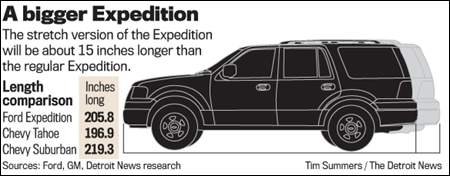
Essentially a stretched version of the Ford Expedition, the new SUV goes into production at Ford's Michigan Truck plant in Wayne next summer, according to analysts who track future car and truck products. A longer version of the Lincoln Navigator will also debut next year.

The launch of the new vehicles will coincide with refreshed versions of the standard-size Expedition and Navigator.

Ford's new super-size SUV has been referred to internally as the "Ford Everest," a name Ford uses in some markets outside the United States. But that moniker vanished into thin air once Ford's marketing division recognized it would only draw attention to the SUV's size.

If there is one lesson Ford learned from its ill-fated Excursion, it was the importance of staying on message.

Ford's new entry will be over 19 feet long, about 15 inches longer than the Expedition, and will boast significantly more cargo room behind its third row of seats, analysts say.

Unlike the Excursion, a 20-foot SUV built on a heavy-duty truck frame, it should be able to fit in most garages.

Even so, Ford's new SUV poses a significant marketing challenge in an era where SUVs have become symbols of gas-guzzling excess.

Earlier this year, Bill Ford redoubled the automaker's commitment to environmental leadership, launching a plan to build 250,000 hybrid vehicles a year by 2010 while simultaneously developing a host of other alternative powertrain options.

"It's a pretty big vehicle that kind of runs counter to their hybrid approach," said Erich Merkle, a brand analyst with IRN Inc. in Grand Rapids.

Jim Hall, an analyst with AutoPacific in Southfield, said Ford is only giving its customers what they want.

"This gives them something to counter the Suburban," Hall said, adding that environmental responsibility is not the only message Ford needs to convey today. "They have another message they have to communicate: 'We're in business to stay in business.' "
Well, if there is one thing I have learned it is that Ford has learned nothing.
For a company slashing 30,000 workers and closing 10 plants, is this the best they can come up with? Then again because this is the best they can come up with is precisely one of the reasons they are slashing 30,000 workers and closing 10 plants in the first place.

Some questions for Ford:
  • What happened to the commitment to "redouble environmental leadership"?
  • Is Ford really giving consumers what they want? If so, why are sales slumping?
  • Are Expedition sales slumping because they are not big enough?
  • Do consumers need cargo room to haul junk? Is that the story?
  • Why does Ford need to counter the Suburban anyway?
  • When everyone is countering everyone else is anyone going to do any good?
  • If you are going to play the countering game, why can't you at least come up with a design that someone else has to counter for a change?
  • What happens when consumers can no longer afford the models you are making?
"It's hard to wean yourself off of them. There's just too much money on the table," Langley said. "They're the crack of the American auto industry."

I guess we will see about that next year in the consumer lead recession when SUV will come to mean "Simply Unsellable Vehicle".

Andy Rooney spoke about cars on 60 minutes this past Sunday. Let's tune in:
The funny thing is -- it isn't really funny it's sad -- I feel bad about the decline of our auto industry but the last three cars I've bought were not made by them. They weren't made by any American car company.

I hate to say it but we no longer make the best cars and Americans are turning away from them. The Japanese Toyota has been the best-selling car in the United States for several years now.

Consumer Reports tested a lot of cars and gave their highest reliability rating to 31 of them. Of those 31 most reliable cars, just two were American. The other 29 were Japanese. Of the cars that were least reliable, 22 were American made.

I have an idea for getting American auto makers out of trouble so they don't have to close plants and fire workers: spend less time thinking up clever names and more time making better cars.
Ford's big plan after cutting 30,000 workers: It supersizes a lemon.
The big dilemma now for Ford: What to name it.

Mike Shedlock / Mish
http://globaleconomicanalysis.blogspot.com/